When you see a stinging insect near your home, your first thought is probably, “Is it dangerous?” Figuring out whether you’re dealing with a bee, wasp, or hornet is the best first step to keep your property safe. And you can figure this out by learning the differences between stinging insects.
When they’re flying around frantically, they might look similar at a glance. But taking a moment to learn about their behavior, appearances, and nesting habits can help you quickly identify which species you’re facing.
Spot the Distinctions in Appearance and Behavior
You can often identify a stinging insect by its body shape, coloring, and behavior:
- Honey Bees: Fuzzy, round bodies with golden-brown coloring, typically slow-moving and gentle. Often seen gathering pollen from flowers. They can only sting once and die afterward.
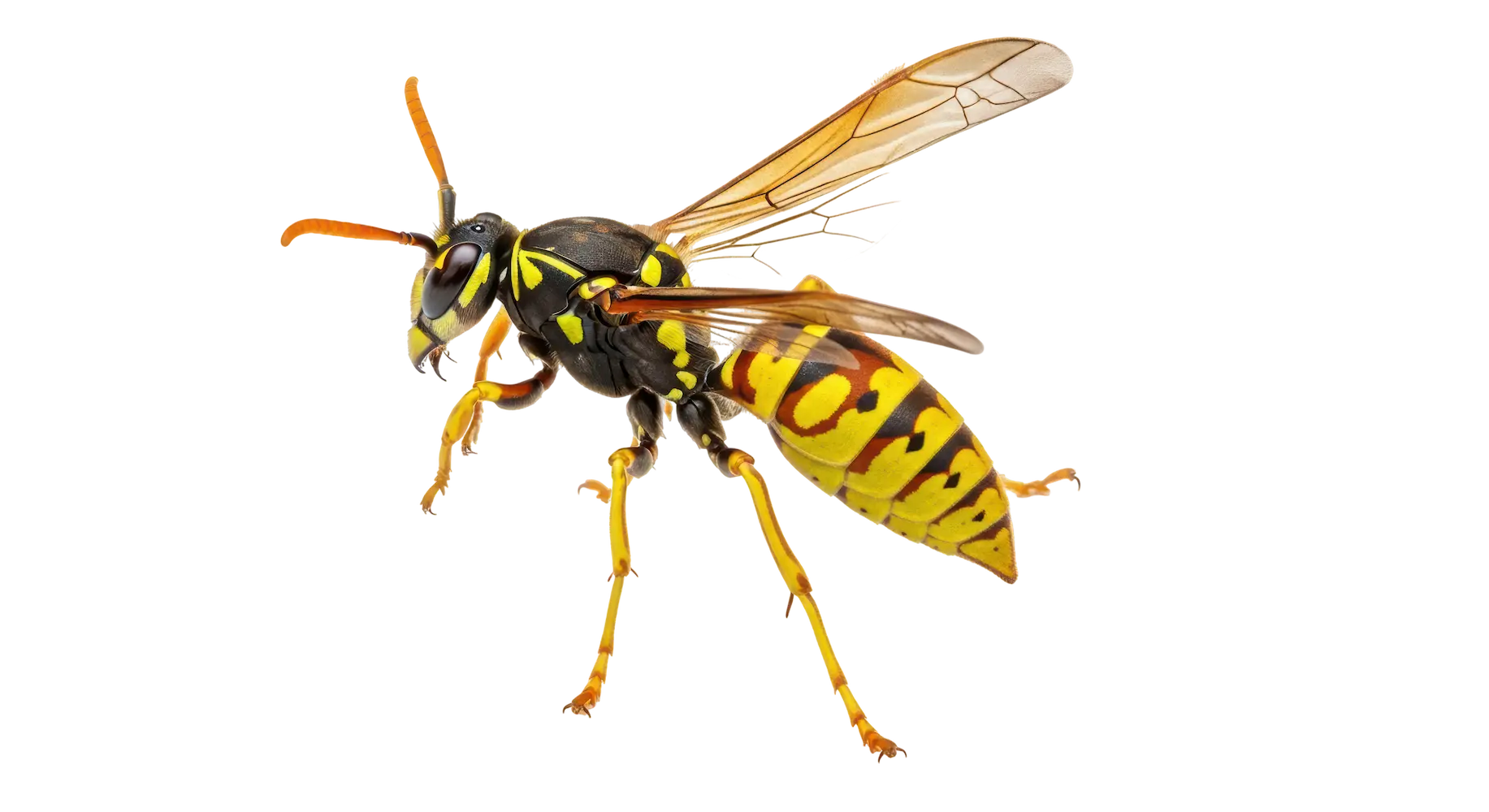
- Yellowjackets: Smooth, shiny black and yellow bodies, but smaller and more compact than other wasps. Frequently hovering near trash cans, food, or sugary drinks. They are able to sting multiple times and are highly aggressive.
- Hornets: Larger than wasps and bees with darker coloration and sometimes white markings. They fly quickly, defend their nests aggressively, and are known to sting repeatedly if disturbed.
- Paper Wasps: Long, slender bodies with yellow, red, or brown markings. Less aggressive than yellowjackets, but will sting when threatened.
Pay Attention to Nests on Your Property
If you’re able to spot a nest near your home, that’s an easy way to identify which pest you’re dealing with. Here’s how to tell them apart:
- Honey Bee Hives: Made of wax with neat, hexagonal cells. Honey bee hives are typically tucked away inside tree cavities, wall voids, or attics. You’ll see a calm flow of bees entering and exiting a small opening.
- Yellowjacket Nests: Enclosed and papery in texture. These nests are made of chewed wood pulp and are often hidden underground, inside wall cavities, or beneath steps. They usually have heavy insect traffic and are fiercely defended.
- Hornet Nests: Large, football-shaped, and grayish in color. Hornet nests are typically suspended from trees, roof eaves, or utility poles. These are highly active and aggressively protected, especially when disturbed.
- Paper Wasp Nests: Shaped like an upside-down umbrella with exposed hexagonal cells. These nests can be found hanging under eaves, railings, or decks. Colonies tend to be smaller, and the insects less aggressive, though they will sting when threatened.
What Makes an Insect Harmful or Helpful?
Bees, especially honey bees, are helpful and essential to the environment. They pollinate flowers, crops, and gardens, and usually only sting if they’re stepped on or handled.
Wasps and hornets serve some beneficial roles, such as preying on garden pests, but their tendency to sting unprovoked makes them much less welcome around homes.
Yellowjackets are the most aggressive stinging insect, and therefore harmful. They can sting repeatedly, especially if their nest is disturbed. Unlike bees, they don’t die after stinging, and they’re most active in late summer when food is scarce, making them more hostile.
When to Call a Wasp Control Professional
If you see a nest or notice a sudden increase in stinging insects, it’s time to act. A swarm near your home may mean a hidden colony is nearby, and while some insects can be left alone, others, like hornets or yellowjackets, require professional removal. For your safety, do not remove a stinging insect nest yourself.
At Eden Advanced Pest Technologies, we specialize in identifying and safely removing nests throughout Spokane, WA and Coeur d’Alene, ID. Whether it’s a helpful bee colony that needs relocation or a wasp infestation threatening your backyard, we’re here to help protect your home and family. A technician will come out, inspect your property, and put together a plan for safe removal and lasting prevention.
Fill out our contact form today to get a free inspection for your property.
Back to Wasp Exterminators & Control