
A Guide on How to Tell the Difference Between Rats and Mice in Your Home
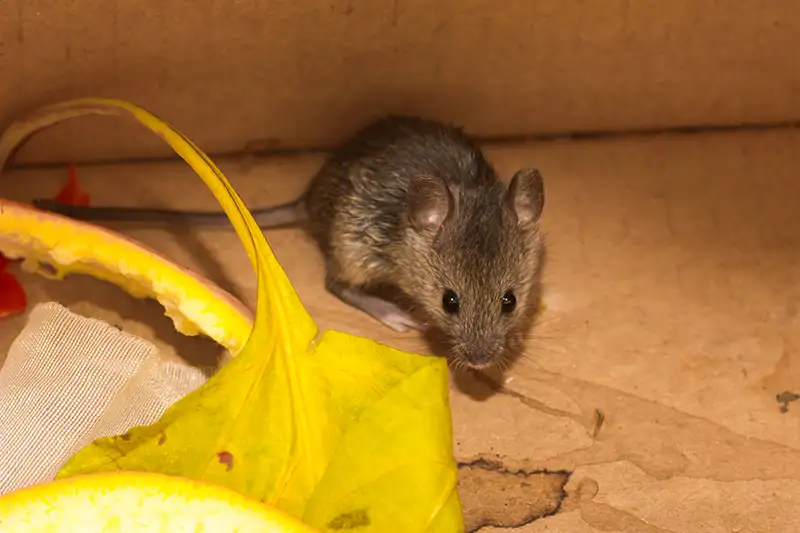
It happens to homeowners every day. They see something unusual, and when they go up for a closer look, recoil – it’s evidence of rodent activity. Maybe it’s some nesting material, or droppings, gnaw marks on your furniture, or an unpleasant musky smell. These are some of the signs that you might be sharing your home with rats or mice.
But which one is it? Is it rats or mice? At Eden Advanced Pest Technologies, we deal with both types of infestations in homes and businesses in Spokane, WA and Coeur d'Alene, ID and the surrounding area. Our technicians need to be able to figure out whether it’s rats or mice – even if they can’t see the rats or mice – so that they can recommend the best treatment options for you.
They use these main criteria to determine whether you have rats or mice in your home.

Do Rats and Mice Look the Same?
Not exactly. They look similar, but there are some key differences in the size and shape of their bodies. If you see a live rodent in your home, try to take a picture of it.
Here are the key features to look for:
| Mouse | Rat | |
| Size | Tiny. As small as a small bird | Heavy. About the size of a work boot. |
| Face Shape | Pointed. Triangular face with a sharp nose. | Blunt. Blocky, heavy face. |
| Ears | Huge. Large and floppy compared to their head. | Comparatively small and pinched compared to their head. |
| Tail | Thin and hairy. Like a piece of string or yarn. | Thick and scaly. Bald and rough. |
| Movement | Darting. Fast, jerky, sporadic hops. | Lumbering. A steady, heavier trot or run. |
Homeowners with rodent infestations don’t always see live rodents – they often notice the evidence of rodents first. This guide is designed to help you identify whether you have rats or mice – without the benefit of seeing a live rodent.
Do You Have Rats or Mice? Here’s What to Look for
Rodents are sneaky, but they’re not perfect criminals. The evidence they leave behind can tell you a lot.
1. Droppings
Most homeowners with rodent infestations find out by discovering droppings. Mouse poop and rat poop, to be specific, but rodent urine stains are also common. Whatever you do, don’t touch the droppings with your bare hands or breathe too close to them. They may contain a wide variety of bacteria, including hantavirus, that can make people sick.
Here’s how the droppings can help you tell whether you have a rat or mouse problem:
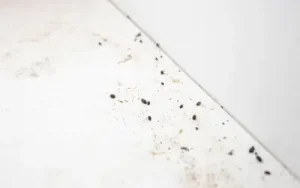
| Mouse Poop | |
|---|---|
| Size | Small, about 1/4 inch long (roughly the size of a grain of rice). |
| Shape | Pointed at one or both ends. |
| Quantity | Mice produce a lot—up to 100 droppings a day—so you will find them scattered everywhere, specifically in cupboards or along baseboards. |
| Handy Tip | If you have to squint or look closely to see if it’s actually droppings, it’s likely mice. |
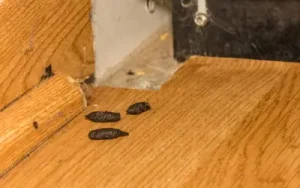
| Rat Poop | |
|---|---|
| Size | Much larger, usually 1/2 to 3/4 inch long (size of a raisin or a small bean). |
| Shape | Thicker and often blunt at the ends (especially Norway rats) or sausage-shaped. |
| Quantity | Found in grouped clusters rather than scattered trails. |
| Handy Tip | If it clearly looks like a small capsule or bean, it’s likely a rat. |
2. Gnaw Marks and Damage
The next most common way that people realize they have a rodent problem is through damage left behind. Rodents have teeth that constantly grow throughout their lives. To keep them short and manageable, they have to grind them down by gnawing on materials.
Here’s what gnaw marks and other types of damage can tell you about whether a rat or mouse is the culprit.
| Gnaw marks | Mice leave small, scratch-like holes. Rats have more powerful teeth and jaws and leave large, ragged holes (about the size of a quarter or larger) with distinct tooth grooves. |
| Damage to plumbing or walls | Rats can chew through much stronger material than mice, so if you notice gnaw marks on wood, PVC, or even metal, it’s likely rats. |
| Insulation destruction | It’s difficult to tell from insulation destruction alone whether it’s rats or mice – both will do it. However, if rodents are tearing up your insulation, there’s a good chance you’ll find droppings nearby. |
| Burrowing | Rats and mice will both burrow in certain circumstances. If you notice burrowing into upholstered furniture, this may tell you it’s mice, as they’re known to do this sometimes. |
3. Sounds and Smells
It’s not often you can hear rats or mice; they tend to be very quiet.
But when you can hear them, it tells you a lot:
| Sounds | ||
|---|---|---|
| Mouse | Rat | |
| Movement | Light Pattering/Scuffling. Sounds like leaves rustling or faint scratching. You might wonder, “Is that a bug or a mouse?” | Heavy Scurrying. You can hear the weight of the animal. It sounds like a distinct run or trot. It sounds like an animal, not a bug. |
| Gnawing | Rapid, Scratchy Chewing. Sounds like sandpaper rubbing against wood. It is faint and fast. | Grinding/Crunching. Loud enough to keep you awake. You can hear the actual snapping of wood or tearing of drywall. |
| Vocals | High-pitched Squeaks. Very sharp, short “chirps.” Often heard when they are fighting or nesting. | Hissing, Chattering, or Grinding. Rats make a deep grinding noise with their teeth (“bruxing”) when stressed or happy. |
| Impact | None. Mice are too light to make thuds. | Thumps/Bumps. If you hear something drop or thud inside a wall or ceiling, it is almost certainly a rat jumping or falling. |
And here’s what you need to know about the difference in their smells.
| Smells | ||
|---|---|---|
| Mouse | Rat | |
| Primary Odor | Stale, moldy, damp wood | Heavy, distinct ammonia (like strong urine) |
| Specific Notes | Popcorn or toasted corn chip smell (chemical in urine) | Often described as “oily” or “rotting” due to larger waste volume |
| Intensity | Builds up slowly; noticed in specific cupboards or small enclosed rooms | Hits immediately upon entering a room; pervasive and difficult to ignore |
| Character | Musty & Stale | Musky & Ammonia (Sharp, burns the nose) |
4. Rub Marks
One thing that many homeowners don’t realize about rats and mice is that they leave behind “rub marks” in areas they traffic frequently. These are greasy streaks that run along the wall that form because of the grease on their fur.
Both rats and mice leave rub marks, but rat rub marks are much more distinct and noticeable. Mouse rub marks can easily go unnoticed.
5. Nesting Material and Other Debris
If you come across nesting material or other debris you suspect may have been in contact with rodents, treat it like droppings. Don’t touch it with your bare hand as it’s likely contaminated and can make you sick.
If you happen upon some of this material, here’s what it can tell you:
| Mouse | Rat | ||
| The Nest | A loose, messy ball (4–6 inches wide). Finely shredded “fluff” (paper, dryer lint, insulation). Very messy, often with droppings mixed inside. Close to warmth (stove drawers, behind the fridge, boxes of clothing). | A flattened “bowl” or heap (8–12 inches wide). Rougher, larger items (whole strips of fabric, plastic bags, twigs). Usually cleaner, with a separate “toilet” area nearby. Structural hiding spots (burrows, deep in attic eaves, under the house). | |
| Debris and Food Scraps | Stash small amounts of food in many random places (dog kibbles in a shoe, seeds in a drawer corner). | Leave bigger trash near the nest entrance (chicken bones, fruit peels, walnut shells). |
Why Is It Important to Know If It’s Rats or Mice?
You cannot treat these infestations the same way. Rats and mice are very different in temperament, and using the wrong approach can lead to failure.
To put it in simple terms, mice are inquisitive, whereas rats are standoffish. In many ways, this makes it easier to treat a mouse problem than a rat problem, but mice also tend to reproduce faster, so they both have their challenges.
Depending on whether it’s rats or mice, here’s how you should adjust your removal approach:
- Trap Size: A mouse trap will merely annoy a rat (or injure it without catching it). A rat trap is often too insensitive to snap on a light-weight mouse.
- Baiting Strategy: Because mice are curious, you can set traps right away. Because rats are cautious, you often have to place unset baited traps for a few days to gain their trust before setting the trigger.
What Type of Rat or Mouse Is It?
Our wet winters create perfect conditions for rats and mice to seek shelter indoors.
Mice in Spokane, WA and Coeur d’Alene, ID
- House mice: If you have a mouse problem, they’re almost certainly house mice. They’re much more likely than deer mice to come indoors.
- Deer mice: Deer mice infestations do happen, but they’re rarer. Don’t be surprised if you find their droppings amongst holiday decorations, rarely-used cabinets, and stored camping gear.
Rats in Spokane, WA and Coeur d’Alene, ID
- Norway Rat: Signs of Norway rats specifically include large burrow holes around foundations, under concrete slabs, or in earthen banks. They prefer to nest at ground level or below, making basements and crawl spaces their favorite hiding spots.
- Packrat: Packrat nests (called middens) are massive structures made of sticks, leaves, and collected objects. They’re often built in attics, sheds, or unused vehicles. So signs you have packrats include finding these large nests and noticing missing small objects around your space.
- Roof Rat: To spot signs of roof rats, look for gnaw marks (especially on fruit) and droppings in attics or upper-level storage areas. You might also hear them running across your ceiling at night, when they’re the most active.
Call Eden Advanced Pest Technologies for Rat and Mouse Control
If you’re dealing with signs of a mouse infestation or any other evidence of rodents, don’t wait. The longer you delay, the worse the problem becomes.
Our trained technicians know exactly how to tell if you have rats or mice and can quickly identify which species you’re dealing with. We’ll inspect your entire property, identifying where rodents are getting in. We use an integrated approach that includes trapping, exclusion work to seal entry points, and ongoing monitoring to make sure the problem doesn’t return.
Call or email Eden Advanced Pest Technologies today to schedule a thorough rodent inspection and customized treatment plan.
Back to Rat & Mice Exterminators, Control & Removal