
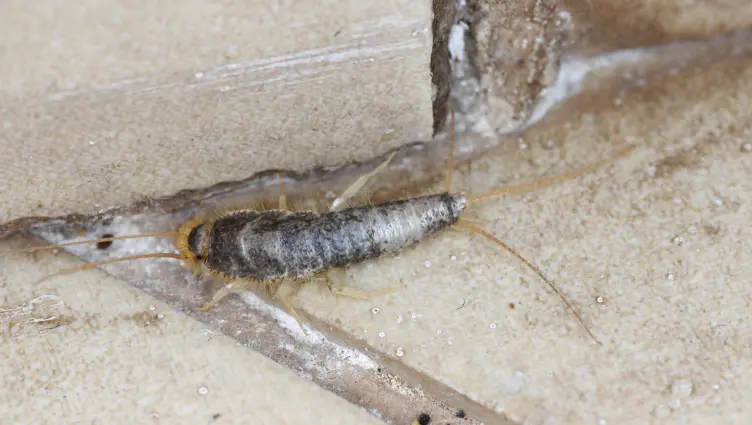
 Seeing small, fast-moving insects dart across your bathroom floor or hiding in your pantry is always unsettling. Silverfish are a common issue in homes throughout the Pacific Northwest, especially as temperatures rise and humidity levels increase. While they may seem harmless at first glance, these pests can quickly multiply and begin to damage your belongings.
To keep the problem under control, it’s important to understand what silverfish are, why they’re in your home, and how to keep them from coming back.
What Are Silverfish and Why are They a Problem?
Silverfish are small, wingless insects with a silvery sheen and a distinctive wriggling movement. They thrive in dark, damp environments and tend to come out at night.
Although they don’t bite or spread disease, they feed on materials rich in starches and sugars. Over time, this can lead to damage in areas you may not check often, like stored boxes, books, or clothing. Paper products, wallpaper glue, and even the food in your pantry can become targets.
Signs of a Silverfish Infestation
Seeing one silverfish doesn’t always mean you have a full infestation, but repeated sightings are a different story. Silverfish prefer to stay out of sight, so infestations can grow quietly before becoming obvious.
You’re likely dealing with a larger issue if you notice:
- Multiple sightings, especially at night
- Small, pepper-like droppings
- Yellowish stains on paper, fabric, or walls
- Shed skins in hidden areas
Where Silverfish Hide in Your Home
Silverfish are drawn to moisture and undisturbed spaces, which makes certain areas of your home more vulnerable than others.
Bathrooms, basements, and crawl spaces are common areas for silverfish to hide, especially if there’s excess humidity. They also tend to gather behind baseboards, inside wall voids, and around plumbing fixtures. Storage areas, like closets, attics, or boxes filled with paper goods, are also common problem areas.
DIY Silverfish Prevention vs. Professional Treatment
If you’re only seeing occasional activity, there are a few steps you can take to make your home less inviting.
- Reduce indoor moisture with a dehumidifier in damp areas
- Fix any leaks around your home and improve ventilation where possible
- Seal cracks and gaps around doors, windows, and pipes
- Store paper goods and clothing in airtight containers
- Keep your home clean and clutter-free to prevent silverfish from hiding
- Vacuum regularly to remove debris and potential eggs
Prevention strategies can help reduce activity, but if a problem has already begun, they likely won’t eliminate the problem entirely. Silverfish often nest in hidden areas, making professional treatment the most reliable solution for long-term control.
Are Firebrats and Silverfish the Same?
Silverfish are sometimes mistaken for firebrats, a closely related insect that looks similar, but has different habits.
The main difference comes down to the environment they enjoy. Silverfish prefer cooler, damp areas like bathrooms and basements, while firebrats are more commonly found in warmer locations such as attics, near furnaces, or around hot water heaters.
Reach Out to Eden Advanced Pest Technologies for Expert Silverfish Control
If silverfish are becoming a recurring issue in your home, it’s time to take a proactive approach. These pests can multiply quickly and cause damage before you even realize the extent of the problem.
At Eden Advanced Pest Technologies, we provide targeted silverfish control solutions designed to eliminate current activity and prevent future infestations. Our team will identify where the problem is coming from, treat the source, and help you keep your home protected in the future.
Contact us today to schedule an inspection for your property, and keep those pesky silverfish away for good.