Key Takeaways
- Identify the insect and nest type before taking action to determine the ideal solution.
- Avoid disturbing active nests, as wasps, yellow jackets, and hornets may become defensive.
- Understand whether a nest is active, abandoned, or dead before attempting removal.
- Professional wasp nest removal may be needed for nests near homes, pets, or high-traffic areas.
- Removing an old nest and sealing nesting areas can help reduce future stinging insect problems.
Discovering a wasp, yellow jacket, or hornet nest near your entryway, patio, or yard turns outdoor space into an immediate safety hazard. While stinging insects help control other garden pests, active nests near high-traffic areas pose a real risk to your family and pets.
Before taking action, accurate identification and proper assessment are essential. Eden Advanced Pest Technologies provides expert identification and safe, effective nest removal across the greater Spokane area and northern Idaho.
How to Identify a Wasp Nest or Other Stinging Insect Nest
Before attempting to address a wasp nest or other stinging insect problem, it is important to identify both the insect and the type of nest it has created. While some nests are easy to recognize, others may look like simple holes or openings that can hide an active colony. Common nesting locations include:
- Paper Wasp Nests: Paper wasps often build small, open, umbrella-shaped nests with visible honeycomb-like cells. These are commonly found under roof edges, porch ceilings, decks, fences, and other protected areas. Paper wasps are usually less aggressive unless their nest is threatened.
- Yellow Jacket Nests: A yellow jacket nest may be located above ground, inside wall voids, attics, sheds, or underground. Ground nests often appear as a small hole with insects entering and leaving. Yellow jackets can become highly defensive when they are disturbed, especially later in the season when colonies are larger.
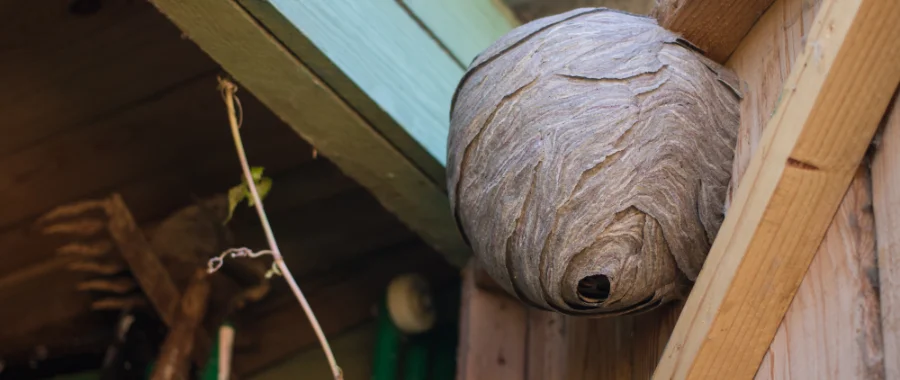
- Hornet Nests: Hornets, including bald-faced hornets, create large enclosed paper nests that are often gray and football-shaped. They are commonly found in trees, shrubs, under roof overhangs, and other elevated locations. Hornets can aggressively defend their nests.
- Bee Nests: Bees typically create colonies in protected spaces such as tree cavities, wall voids, or hive structures. Unlike wasps and yellow jackets, bees are generally focused on collecting pollen and protecting their colony rather than hunting insects.
- Carpenter Ants and Other Insects: Holes in wood or soil are not always caused by stinging insects. Carpenter ants may create openings in damaged wood, while other insects may use existing holes or underground spaces as shelter.
- Ground-Nesting Wasps: Some wasps build individual burrows in soil, mulch, or lawns rather than creating large paper nests. These small holes can be mistaken for yellow jacket nests or other underground insect activity. Most solitary ground-nesting wasps are less aggressive than yellow jackets, but they should still be left undisturbed until the insect has been properly identified.
If you are unsure what created a nest or hole, it is best to avoid disturbing it until the insect has been properly identified.
What to Do When You First Find a Nest
If you find a wasp nest on your property, avoid the immediate urge to remove or disturb it. Instead, the safest approach is to watch the nest from a safe distance and determine its location, size, and level of activity. After identifying a possible nest:
- Keep children and pets away from the area.
- Avoid touching, shaking, or spraying the nest immediately.
- Watch the entrance from a safe distance to determine whether insects are actively coming and going.
- Take note of the nest location so it can be safely treated if needed.
Is the Nest Active, Dormant, or Dead?
Every wasp nest situation is different, and the best response depends on what is happening inside the nest. An active colony requires a different approach than an abandoned or empty nest. Before deciding what steps to take, evaluate the nest carefully and look for these signs to determine its current condition:
- Active Nest: An active nest will have visible insect activity, with wasps, yellow jackets, or hornets regularly flying in and out of the nest. These colonies should be treated with caution because the insects may become defensive and aggressively protect the nest if they feel threatened.
- Dormant or Abandoned Nest: A dormant or abandoned nest shows little to no insect activity and may no longer contain a functioning colony. While some old nests are not reused, the surrounding area may still provide an attractive location for new stinging insects to build a nest.
- Dead Nest: A dead nest no longer has any insect activity and is not supporting a living colony. Although these are generally safer to remove, homeowners should always verify that the nest is completely inactive before attempting removal.
What Not to Do When You Find a Wasp Nest
Many homeowners attempt to remove nests themselves, but disturbing an active colony can increase the risk of multiple stings. Some common mistakes include:
- Knocking down a nest while insects are still active.
- Blocking a nest entrance without removing the colony.
- Using household sprays that may not reach the entire nest.
- Burning nests or using unsafe removal methods.
- Getting too close to identify the insect.
Ground-nesting yellow jackets can be especially dangerous because the nest entrance may appear small while the colony underground may contain hundreds or even thousands of insects.
When to Call a Professional for Wasp Nest Removal
Professional wasp nest removal is recommended when a nest is active, difficult to access, or located near areas where people regularly spend time. Contact an experienced professional if you find:
- Ground or Nearby Yellow Jacket Nests: Yellow jacket nests located in the ground or close to your home can create a safety concern, especially when the entrance is near walkways, yards, or areas used by your family and pets.
- Hornet Nests in Elevated or Protected Areas: Hornets often build in trees, along rooflines, or on structures where they can be difficult to access safely. These nests may require professional attention due to their location and defensive behavior.
- Nests Near High-Traffic Areas: A nest located near doors, sidewalks, patios, playgrounds, or pet areas can increase the risk of accidental encounters and stings. These nests are more likely to interfere with everyday activities.
- Nests Hidden Inside Structures: Stinging insects nesting inside walls, attics, sheds, or other enclosed areas can be challenging to locate and remove. Professional identification can help prevent the colony from spreading or returning.
- Large Numbers of Stinging Insects: An increase in wasps, yellow jackets, or hornets around your property may indicate a nearby nest or growing colony. Heavy insect activity should be evaluated to determine the source and safest solution.
A professional wasp exterminator can identify the insect, locate the nest, and determine the best way to remove the problem.
Removing Dead Nests and Filling Underground Holes
A dead or abandoned nest may be removed once you are certain it is no longer active. While this can help clean up the area, it does not always prevent wasps or yellow jackets from returning to nearby locations.
For underground yellow jacket or ground wasp nests, filling the entrance hole after the colony has been eliminated may help reduce the chance of future nesting. Make sure the nest is completely inactive before sealing the opening.
Get Help With Wasp Nest Removal From Eden Advanced Pest Technologies
Finding a wasp or yellow jacket nest on your property can quickly turn outdoor areas into places you want to avoid. At Eden Advanced Pest Technologies, we help homeowners throughout the greater Spokane area and northern Idaho with professional stinging insect identification and wasp nest removal services. We understand how disruptive stinging insects can be, and our team is here to help you take back your yard with confidence.
Identifying a stinging insect nest can be difficult, especially when different species build nests in similar locations. If you are unsure what you have found, contact Eden Advanced Pest Technologies and let our team help identify the problem and find the right solution.
Back to Wasp Exterminators and Control